My wife and I recently went on a makeup honeymoon in Bulgaria, since our real first honeymoon became an unexpected ménage à trois with the viral spectre still haunting all of us. Anyway, our time in Sofia, Veliko Tarnovo, and Plovdiv was incredible, and that trip exposed me to a culture that I didn't really know too much about. My Biblical Studies degrees spent more time focusing on the ancient Near East and Western Europe (including Greece), so I had minimal knowledge about anything in the Balkans. It is a remarkable place. My one regret is that we didn't go far enough east to visit Varna to see the necropolis and all the really old stuff.
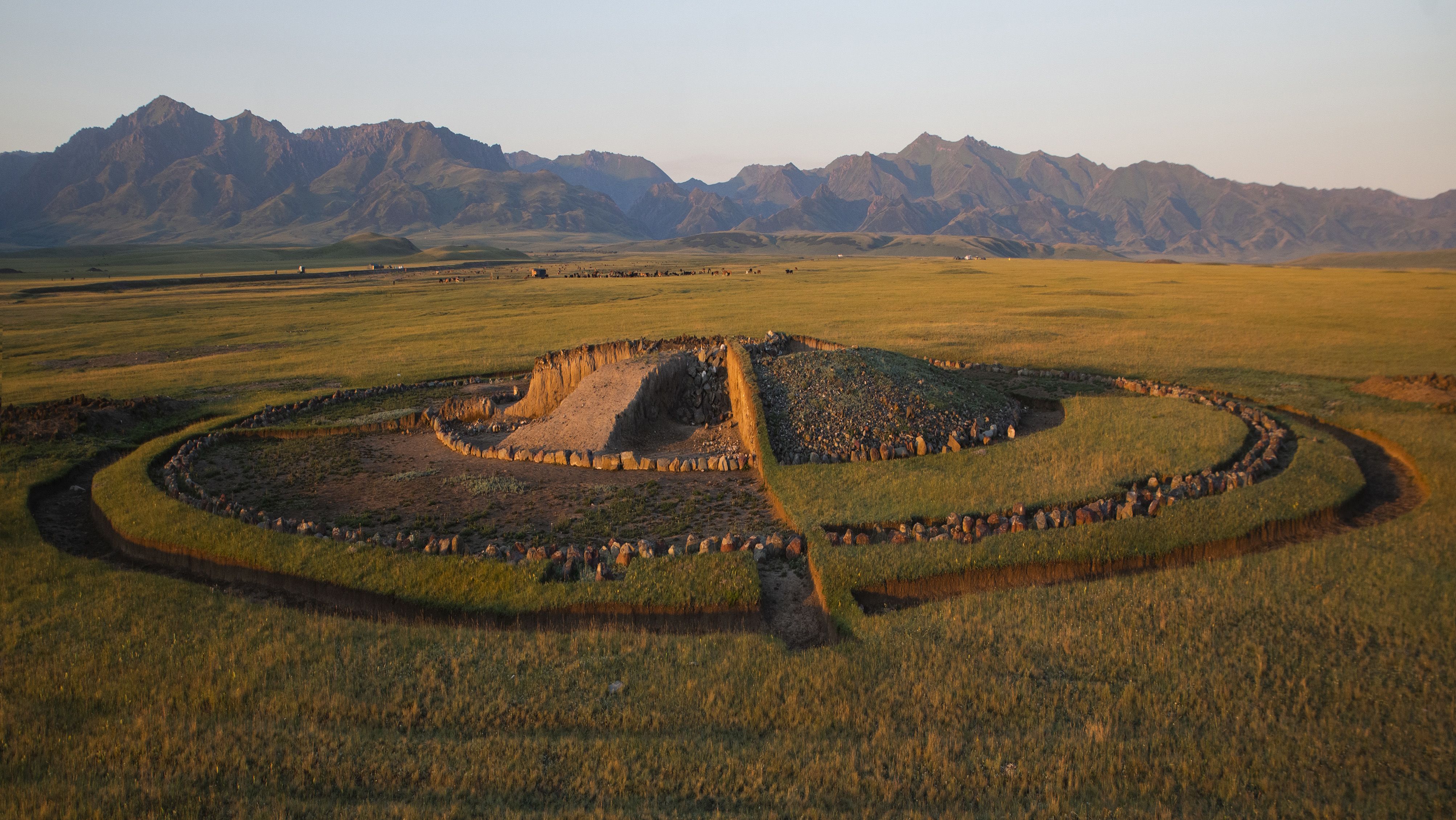
Besides the communist architecture and Christian churches/monasteries, the ancient history of the area was what was most fascinating to me, so when I came across an article about some Scythian kurgans the other day, it inspired some of my world building for this new sandbox campaign. Here's a pretty measured take on the headline: Did Russian Archaeologists Really Discover a New Ancient Culture? (Sidenote: Candida Moss is a top-notch scholar). This tidbit stood out the most:
Vinogradov and his team believe that the grave was likely a family tomb used over successive generations. The discolored soil that surrounds it suggests that, at some point, the tomb was sealed and set ablaze. It would then have been covered in soil to create the burial mound (known as a kurgan) typical of the region.
This is such an interested burial practice! How many generations are included in the burial? Why are they burnt? What happens if they aren't burnt?
I've since incorporated familial kurgans into one of the cultures in my sandbox, with some even more specific details about generational naming conventions. Here's an early draft of what the Poroslovak culture looks like:
- Only the souls of those buried and then burned with seven generations of their kin will enter the afterlife. Family barrows called kurgans dot the countryside. Sometimes, a family doesn’t make it to a full seven generations, and whatever members are left buried haunt their barrow. These undead families can be put to rest, but only via a very complex and expensive ritual.
- Families mark their distance from the last "passage" (kurgan burning) with a prefix on each generation’s surname: Pyri-, Ftori-, Treti-, Vurti-, Peti-, Shesti-, Sedmi-. Women keep their maiden surname, but are most often buried with their closest male relative.
- Illegitimate Children are given “eighth” as the prefix to their surname, Osmi-. Many Osmi sons and daughters work hard to “become numbered” as a full member of their father’s family–this often comes at a significant cost and can be almost impossible for some.
I chose seven because seven is the most magical number. For the generational names, I stole (and butchered) ordinal numbers from Bulgarian and Russian (forgive me--it is a fantasy world). I thought that the Osmi- idea (A pretty heavy nod to Game of Thrones) could create some really interesting social pressure and hooks for any of my players who decide to play a Poroslovak human.
There's some larger political intrigue I'm working on for this kingdom of kurgan makers, and I might write about that later. In the meantime, I'll keep looking for archeological and anthropological headlines that pique my creativity.